What Does Dry Stone Walling Cost? (Per Metre, and What Changes the Price)
Straight answer: dry stone walling is usually priced by the square metre of wall face, and the figure swings on four things — the stone, the height, the access, and whether you’re rebuilding an old wall or building a new one.
If you’ve asked two wallers for a price and got very different numbers, it’s almost always because they’re pricing slightly different jobs — or because one has assumed reclaimed stone and the other has priced new stone in.
This guide explains the real cost drivers in plain English, so you can compare quotes like-for-like and choose the right approach for the wall.
First: how dry stone walling is measured
Most wallers price by the square metre of wall face — and a wall has two faces, so a metre of wall a metre high is roughly two square metres of work. Some price by the linear metre at a stated height instead. Neither is wrong, but you can’t compare two quotes until you know which they’ve used. If one quote looks half the price of another, check that first.
The biggest cost drivers (in order)
1) The stone — yours, reclaimed, or bought in
This is often the number-one swing.
- Re-using sound stone on site (a rebuild, or stone already on the property) keeps the cost down.
- Buying in walling stone to match adds material and haulage — and good local walling stone isn’t cheap.
A clear quote will say exactly what stone is assumed, and who’s supplying it.
2) Height, batter and foundations
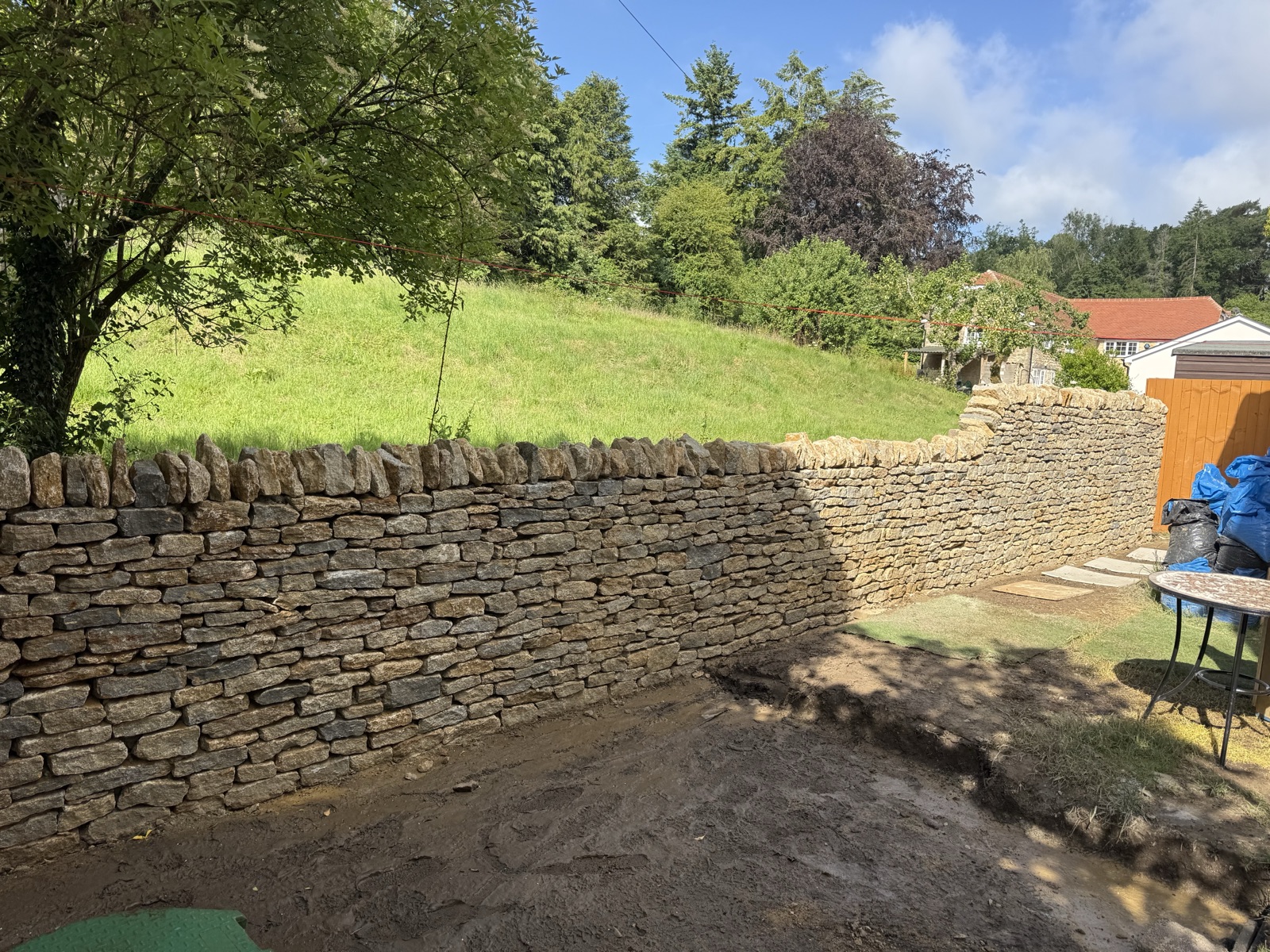
A dry stone wall holds together by how it’s built — graded stone, a good batter (the faces leaning gently inward as the wall rises) and a heavy coping locking the top. Taller walls need more stone, a wider base and a proper dug foundation of large stones, so cost rises faster than height alone.
3) Rebuild vs build new
Rebuilding looks cheaper because the stone’s already there — but taking a wall down by hand, sorting the stone into faces, hearting and copes, and re-laying it is skilled, careful work. A retaining wall holding back a bank is more involved again than a free-standing field or garden wall.
4) Access and ground
Stone is heavy. Whether a machine can get the stone and spoil to the wall line — or whether it’s all barrowed by hand across a garden — changes the labour. Soft or sloping ground means more foundation work.
5) Copings, features and finish
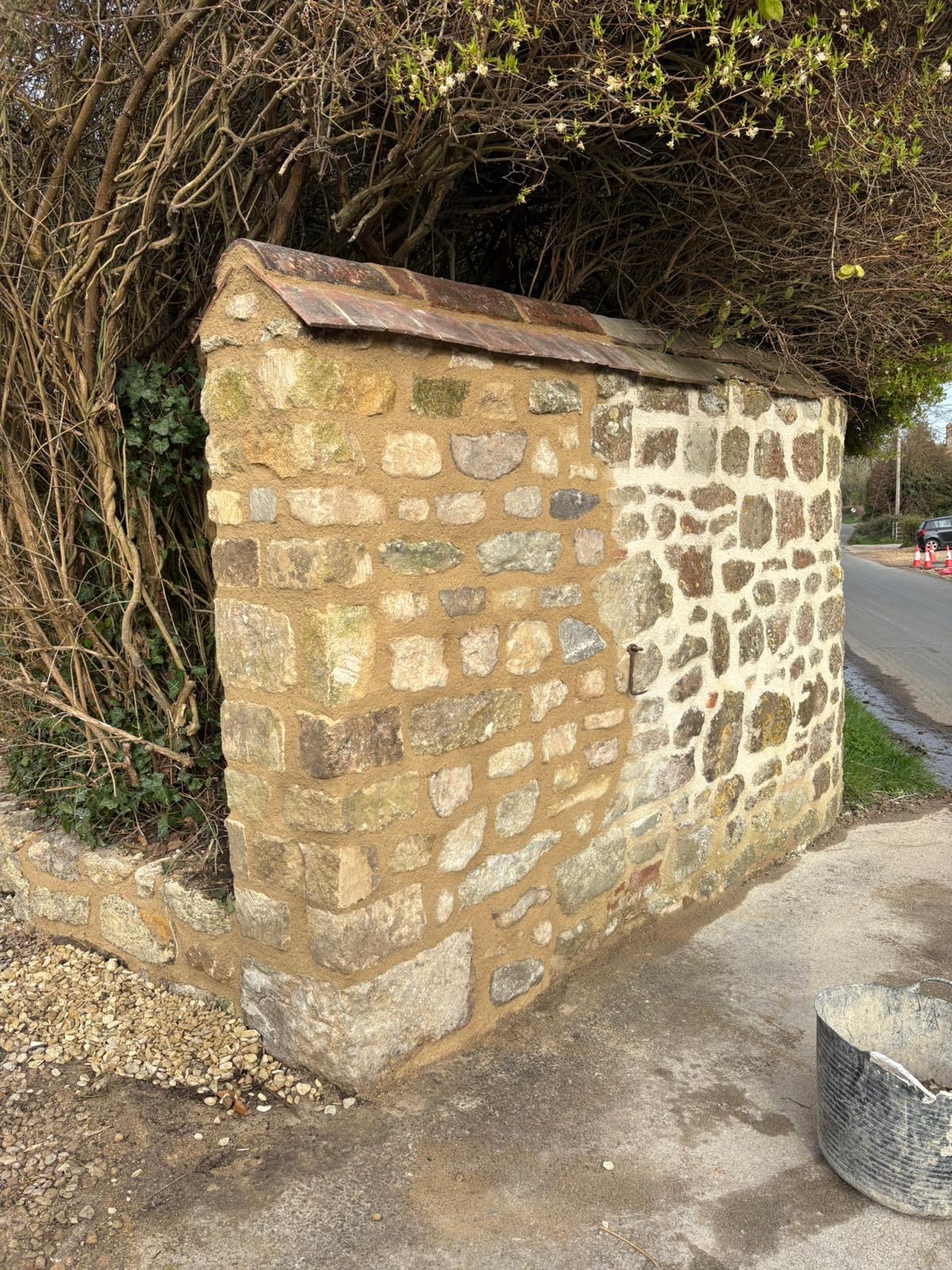
A simple capped top is one thing; curves, returns, cheek-ends, throughstones and a traditional coping all add hand-work. They’re also what make a wall look right, so they’re usually worth it.
”Ballpark”, honestly
We’d rather not quote a single £/m² that misleads you. The honest way to think about it:
- a short, free-standing garden wall in your own stone sits at one end;
- a tall, retaining wall in bought-in stone with awkward access sits at the other;
- most jobs are priced as a fixed quote once the stone, the line and the ground have been seen.
If someone gives a price per metre without seeing the wall and the stone, treat it as an early estimate only.
How to compare quotes fairly
Ask each waller:
- Is that per square metre of face or per linear metre at a height?
- Is the stone supplied, or are you using mine?
- Are foundations included?
- What coping is assumed?
- Is muck-away and site tidy-up included?
- What could change once you start taking the old wall down?
How we price it
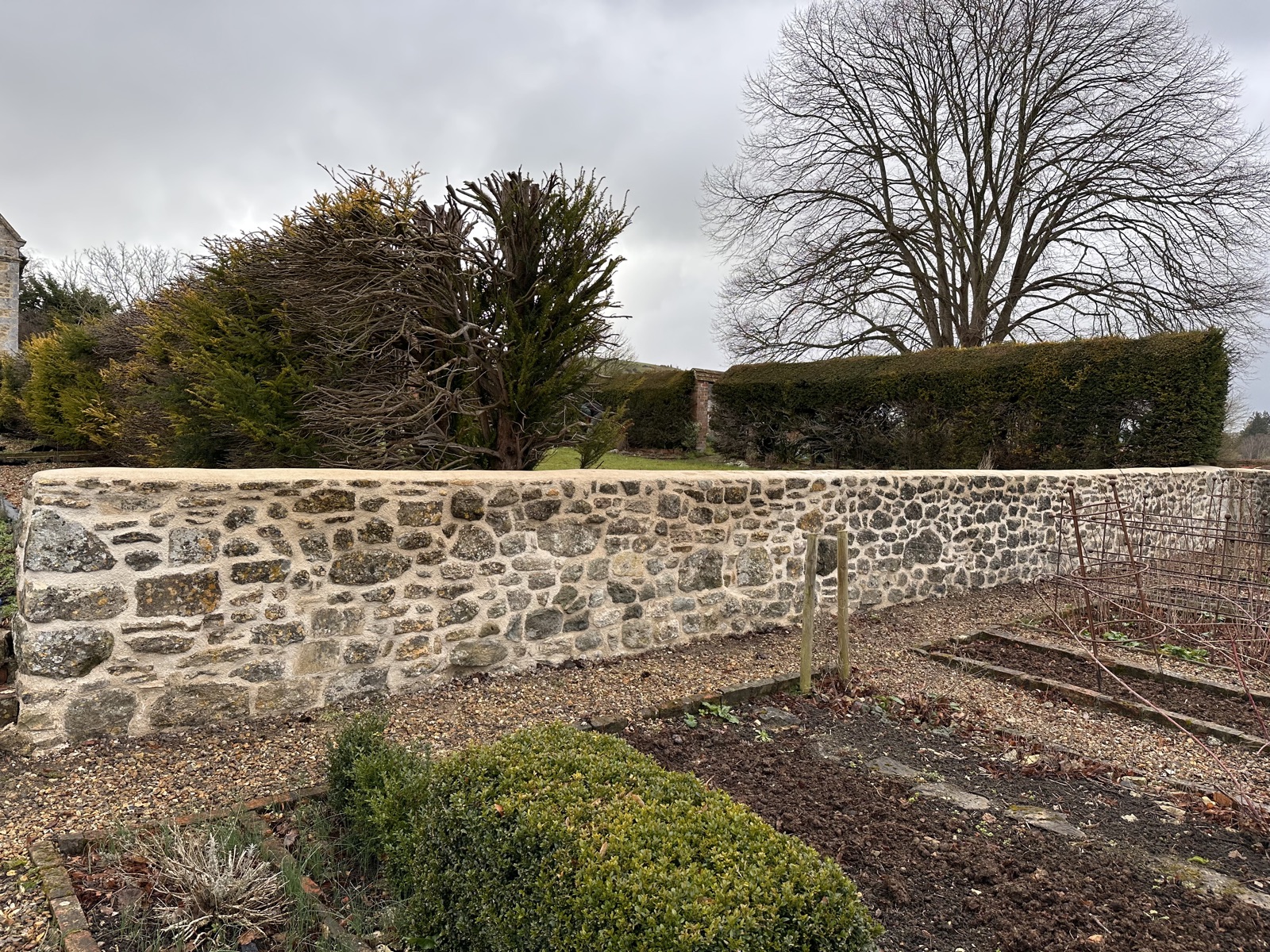
Every wall is different — the stone, the ground and the line all change the job — so we price each one on what it actually needs, salvage and re-use sound stone wherever we can, and tell you honestly if a rebuild will only need part of the run touched. Where a full-width traditional wall isn’t practical, we can also face a structural core in dry stone so you get the look without the footprint.
Get a reliable quote faster: what to send us
To speed things up, send a couple of wide photos of the whole run, a close-up of the stone, the rough length and height, whether it’s a rebuild or new, and your postcode.
Send it over and we’ll give you an initial steer, then advise whether a site visit is needed.